
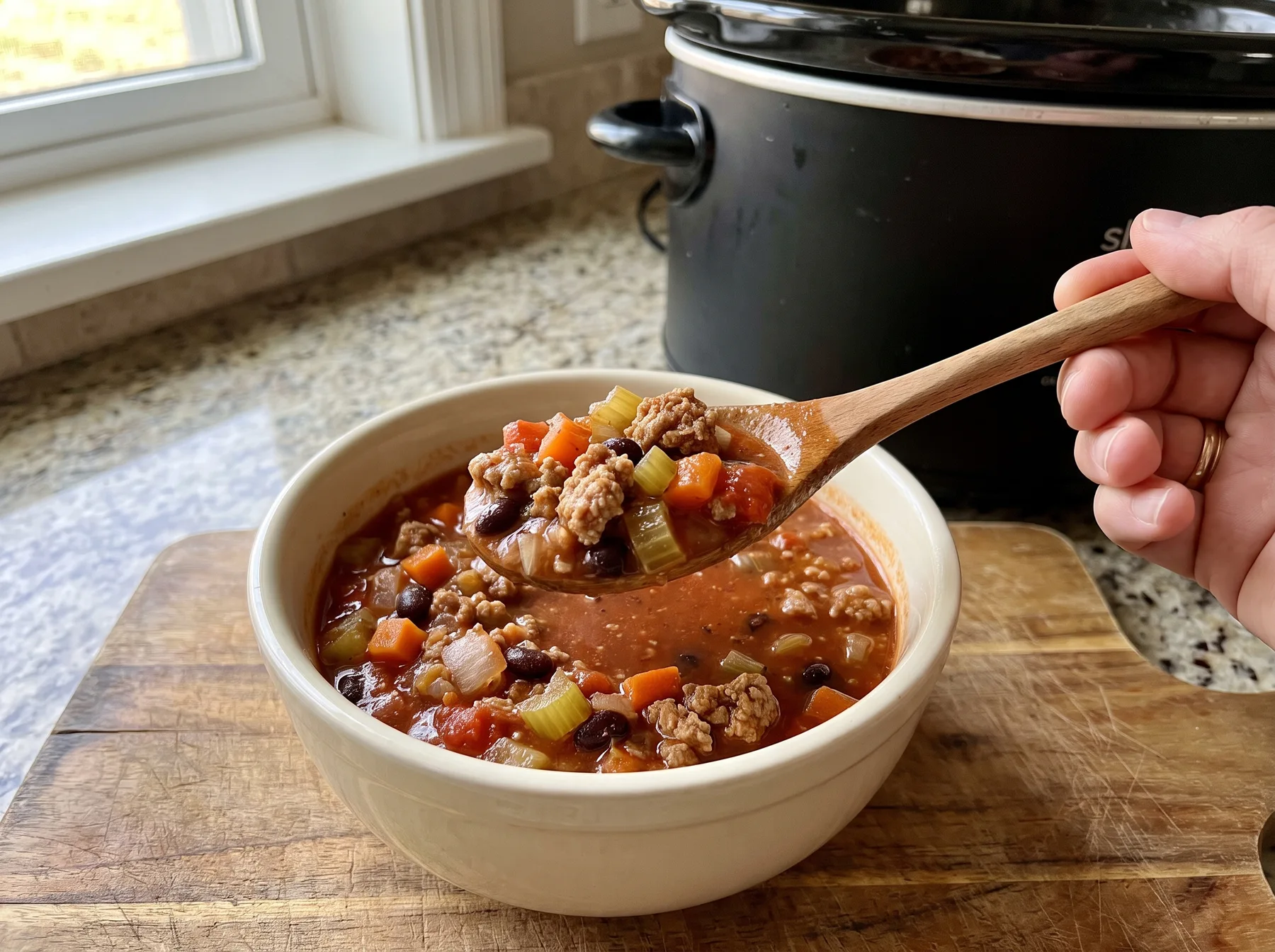
A protein-focused slow cooker soup starts with choosing an add-in that suits the broth, vegetables, and cooking time. Chicken, beans, lentils, tofu, dairy, and edamame can all work, but they do not belong in the cooker at the same moment. This guide explains how to build a more filling soup with good texture, then puts the approach to use in a simple chicken and white bean soup.
Start with the soup style
Before choosing a protein, decide whether your soup is brothy, creamy, tomato-based, bean-heavy, or built around a sturdy vegetable such as potato or squash. The best add-in should complement the soup rather than make it crowded or overly thick.
- Brothy chicken and vegetable soups work well with chicken breast, chicken thighs, white beans, shredded turkey, or shelled edamame.
- Tomato-based soups and chili-style soups can handle ground turkey, lean ground beef, black beans, kidney beans, chickpeas, or lentils.
- Creamy soups are often a good place for blended white beans, silken tofu, or plain Greek yogurt stirred in after cooking.
- Hearty vegetable soups benefit from lentils, beans, shredded chicken, or diced cooked turkey.
For a balanced bowl, use one main protein and one supporting ingredient when it fits. Chicken and white beans, turkey and lentils, or tofu and edamame are easier to portion than a soup made with several competing proteins.
Six useful protein add-ins and when to add them
1. Boneless chicken breasts or thighs
Chicken is a straightforward choice for soups with enough broth to keep the meat surrounded by liquid. Add raw boneless, skinless chicken at the beginning with the vegetables and broth. Once it reaches 165°F in the thickest part, remove it, shred or chop it, and return it to the soup.
Chicken breast has a mild flavor and shreds easily. Thighs bring a richer texture and are especially useful in soups that cook on LOW for a longer window.
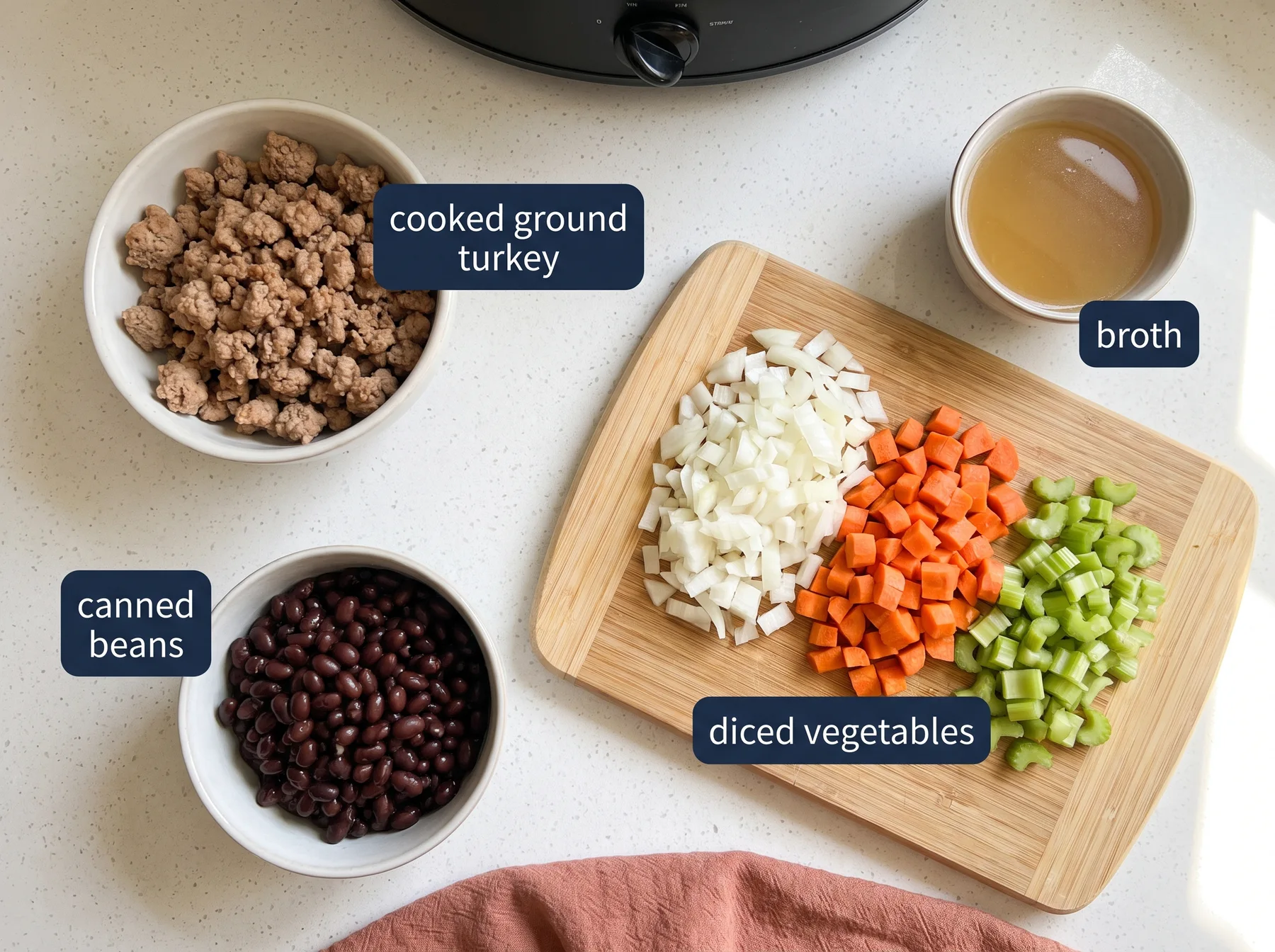
2. Cooked ground turkey or lean ground beef
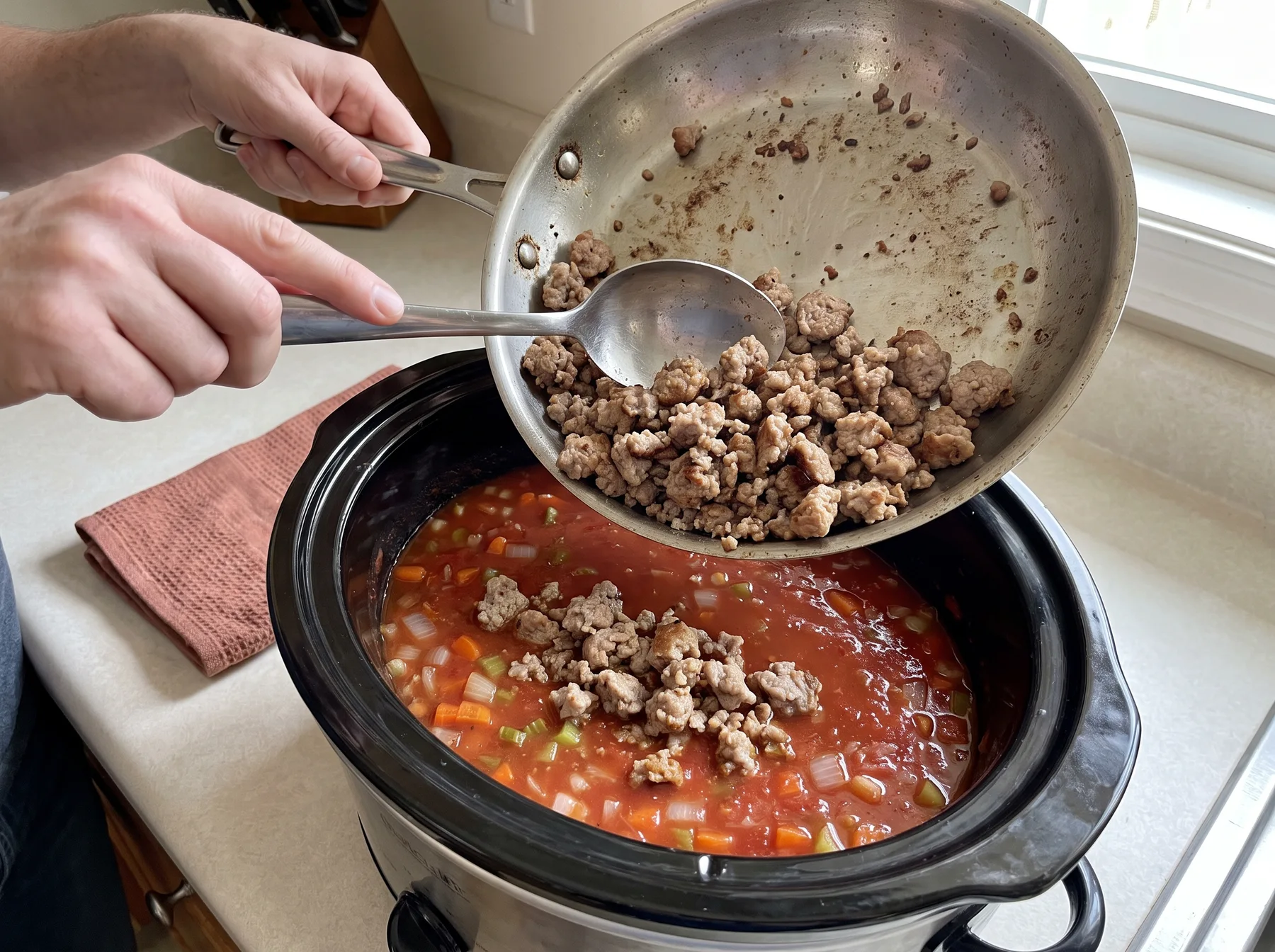
Ground meat is best browned in a skillet before it goes into the slow cooker. This prevents large clumps, improves texture, and lets you drain excess fat if needed. Add the cooked meat at the beginning so it can take on the flavor of the broth and seasonings.
This approach works particularly well for tomato soups, taco-style soups, and chili. Avoid placing a solid block of raw ground meat directly in the slow cooker, since it is difficult to break up evenly and can cook unevenly.
3. Canned beans
White beans, chickpeas, black beans, kidney beans, and pinto beans make soup more substantial with almost no extra prep. Drain and rinse canned beans, then add them during the last 30 to 60 minutes if you want them to hold their shape. Add them at the start only when a softer, more blended texture is welcome.
White beans suit chicken, lemon, herb, and vegetable soups. Black beans and pinto beans are natural fits for tomato, corn, and Southwestern-style soups.
4. Dry lentils
Lentils cook directly in soup and absorb the flavor of the broth. Brown or green lentils keep more definition, while red lentils soften quickly and thicken the liquid. Rinse dry lentils and add them at the start with enough broth for expansion.
Use lentils as the main protein in a meatless soup or pair a modest amount with turkey or chicken. Check the soup near the end of cooking and add broth if the lentils have made it thicker than you prefer.
5. Tofu or plain Greek yogurt
These add-ins are most useful in creamy soups, but timing matters. Cubed firm tofu can be added in the last 20 to 30 minutes so it warms through without falling apart. Silken tofu can be blended into a finished soup for a smoother body.
Plain Greek yogurt should be stirred in after cooking, with the slow cooker turned off. Temper it first by whisking a few spoonfuls of warm soup into the yogurt, then stir the mixture back into the soup. This reduces the chance of curdling.
6. Frozen shelled edamame
Shelled edamame is a convenient option for vegetable-forward soups. Add it during the final 20 to 30 minutes of cooking, just long enough to heat through. Its mild flavor works well with chicken broth, ginger, garlic, mushrooms, greens, and lighter vegetable soups.
Edamame is not a great fit for every soup. In a rustic Italian-style or chili-style pot, beans or lentils usually blend in more naturally.
Timing rules that protect texture
Slow cookers reward sturdy ingredients. Aromatics, firm vegetables, dry lentils, broth, and raw whole cuts of poultry can begin together. Delicate ingredients should wait.
Add leafy greens in the final 5 to 10 minutes. Stir in cooked grains, canned beans, frozen vegetables, cooked shredded meat, and tender tofu near the end. Dairy belongs after the heat is off. This one habit helps prevent gray greens, mushy beans, broken noodles, and grainy dairy.
If the soup needs thickening, avoid adding extra protein simply for body. Instead, mash some beans against the side of the cooker, blend a portion of the finished soup, or let the soup stand uncovered for a few minutes after cooking. These options preserve the intended flavor and keep portions predictable.
Avoid common slow cooker soup problems
Adding every protein at the beginning
Chicken can cook from raw in the soup, but canned beans, tofu, edamame, and dairy do not need several hours of heat. Adding them late gives you better texture and clearer flavors.
Using too little liquid for lentils
Dry lentils absorb broth as they cook. Start with a soup that has adequate liquid, then check consistency near the end. A thicker lentil soup may be appealing, but it should not become so thick that the vegetables and protein are difficult to portion.
Forgetting salt sources
Broth, canned tomatoes, canned beans, seasoning blends, and cheese can all contribute sodium. Choose lower-sodium broth when available, rinse canned beans, and taste the finished soup before adding more salt.
Letting cooked chicken overcook after shredding
Once chicken reaches a safe temperature, shred it and return it only long enough to warm through. Keeping shredded chicken on heat for an extended period can make it stringy and dry.
A simple protein-building formula
For many slow cooker soups, this formula keeps planning easy:
- Choose a broth and a vegetable base.
- Add one main protein that can handle the full cooking time, such as chicken or dry lentils.
- Add a supporting protein near the end, such as beans or edamame, if the soup needs more substance.
- Finish with greens, fresh herbs, acid, or dairy after long cooking is complete.
The formula is flexible, but it also keeps the ingredient list manageable. A soup does not need every possible add-in to be satisfying.
Helpful answers
Frequently asked questions
Can I put raw chicken in slow cooker soup?
Yes. Place raw boneless chicken in the broth and cook until it reaches 165°F in the thickest part. Shred or chop it, then return it to the soup.
Should canned beans go in at the beginning or end?
Add canned beans near the end, usually in the final 30 to 60 minutes, when you want them to stay intact. Starting them earlier produces a softer texture.
Can I add protein powder to soup?
It is usually not a good match for slow cooker soup. Protein powders can create a chalky texture, clump in hot liquid, or add flavors that compete with the soup. Use familiar whole-food ingredients instead.
How do I make a creamy soup more protein-focused?
Blend in white beans or silken tofu, or stir in tempered plain Greek yogurt after cooking. Each option changes the flavor and texture slightly, so use one that suits the soup's seasonings.

MACRO SIMMER RECIPE
Slow Cooker Chicken and White Bean Soup
A brothy chicken, white bean, and vegetable soup that uses chicken as the main protein and adds beans near the end for a heartier bowl.
Ingredients
Instructions
Allergens
This recipe contains no major allergens as written. Check the labels on broth and canned beans, since packaged products can vary. The recipe is naturally dairy-free and gluten-free when all packaged ingredients are labeled accordingly.
Substitutions
Use boneless, skinless chicken thighs in place of chicken breasts. Cook them to 165°F and expect a richer texture.
Great Northern beans may replace cannellini beans. Add them at the same point in the recipe. Chickpeas also work, though they create a firmer, nuttier bite.
Use chopped kale instead of spinach, adding it with the beans so it has more time to soften. Do not use frozen spinach without thawing and squeezing it first, as it can water down the broth.
Storage, freezing and reheating
Cool leftovers promptly and refrigerate in covered containers within 2 hours. Use refrigerated soup within 3 to 4 days.
For freezing, divide cooled soup into freezer-safe portions, leaving room for expansion. Freeze for up to 3 months for best quality. The spinach will be softer after freezing, but the soup remains suitable for reheating.
Reheat refrigerated or thawed soup on the stovetop or in the microwave until it reaches 165°F. Add a small splash of broth or water if the beans have thickened the soup.
Nutrition
Estimated nutrition per serving: Calories: 310 calories; Protein: 35 g; Carbohydrates: 31 g; Fat: 6 g; Fiber: 8 g; Sugar: 6 g; Sodium: 690 mg.
Helpful equipment
Affiliate disclosure: This post contains paid links. As an Amazon Associate I earn from qualifying purchases.
- Manual Can Opener (paid link)A manual can opener with an ergonomic turning knob for opening canned beans, tomatoes, broth, and other pantry ingredients.
- Crock-Pot 6-Quart Programmable Slow Cooker (paid link)A 6-quart programmable slow cooker with a digital timer and locking lid for standard slow-cooker recipes and easier transport.
Join the conversation
0 comments
Leave a comment
Your email address will not be published. Comments are reviewed before appearing.