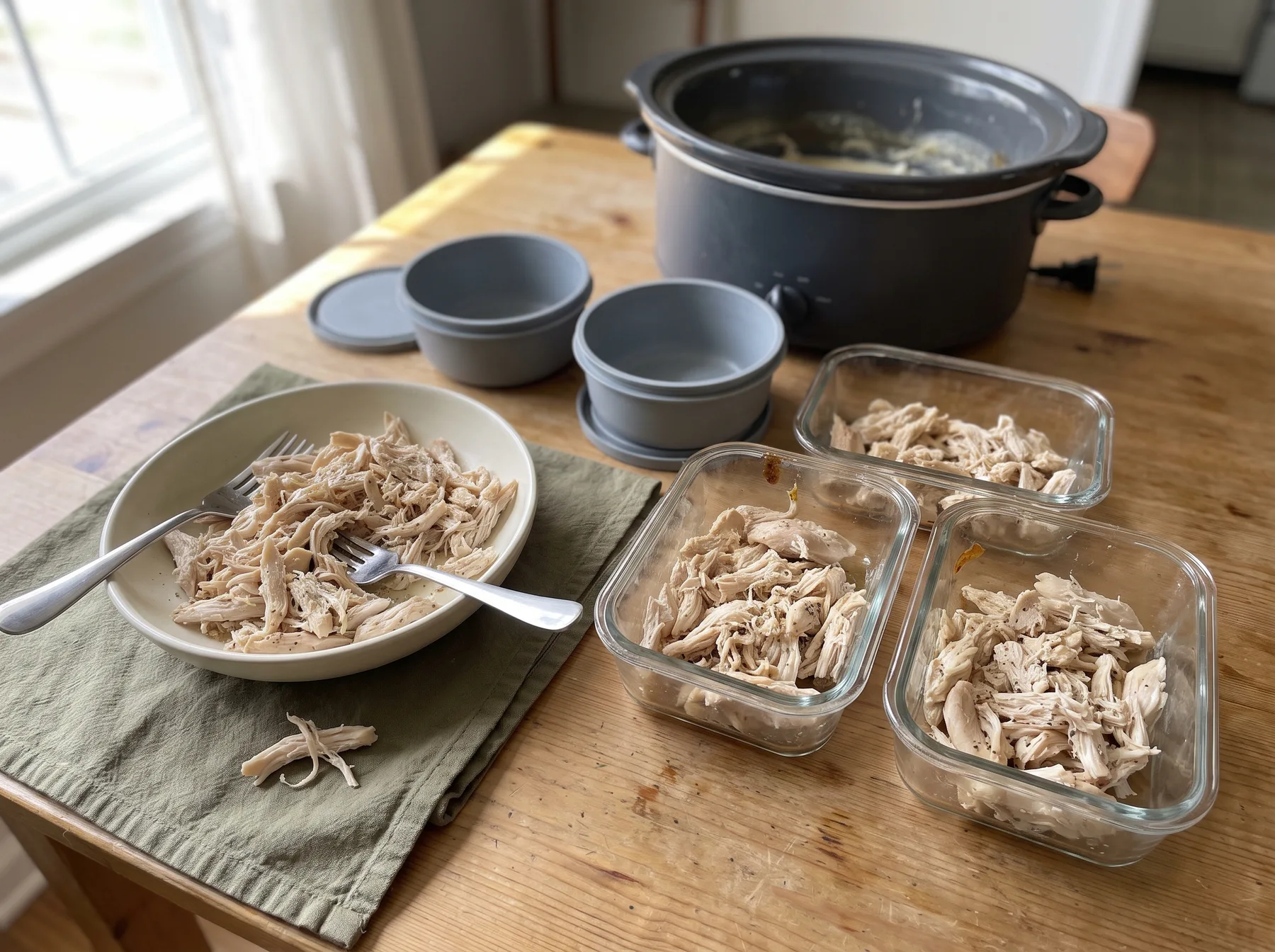
Slow cooker chicken meal prep is a practical way to get a versatile cooked chicken component ready for several lunches or dinners without standing at the stove. The useful work happens after the slow cooker is finished: checking that the chicken is safely cooked, dividing it into portions you will realistically use, cooling it promptly, and giving each portion a clear plan.
This guide focuses on plain or lightly seasoned slow-cooker chicken that can move into bowls, wraps, salads, and quick soups. Use it alongside a complete chicken recipe that provides the ingredient quantities, cooking setting, cook time, and yield for your specific batch.
Why slow cooker chicken works for meal prep
Chicken is a flexible starting point for protein-focused meals, especially when the rest of the meal can change from day to day. One portion can go into a grain bowl with vegetables, while another can become a taco filling or a simple soup. That variety matters when you are trying to avoid eating the same meal repeatedly.
A slow cooker also shifts much of the active work to the beginning and end of cooking. You still need to follow the full recipe carefully, but the hands-on tasks are usually limited to preparing ingredients, transferring the cooked chicken, and portioning it for later.
Before cooking, decide what you want the batch to do. Chicken that will be used in tacos may suit a different seasoning profile than chicken intended for a soup or salad. A neutral seasoning approach can be particularly useful if you want to change the flavor later with sauces, dressings, or toppings.
Start safely before the slow cooker goes on
Safe meal prep begins with cold chicken and a clean work area. Keep raw chicken refrigerated until you are ready to prepare it, and wash cutting boards, knives, countertops, and hands with hot, soapy water after they contact raw poultry.
The USDA advises thawing chicken in the refrigerator, in cold water, or in a microwave. Chicken thawed in cold water or a microwave should be cooked immediately. Do not thaw chicken on the counter, and do not place frozen chicken directly into a slow cooker. Slow cookers may take too long to bring frozen poultry through temperatures where bacteria can multiply.
Choose a complete recipe written for your slow cooker and follow its ingredient amounts and cooking directions. Do not guess at a cook time based solely on the weight or appearance of the chicken. Slow cooker models, chicken cuts, starting temperature, and the amount of food in the pot all affect cooking.
Avoid crowding the cooker beyond its manufacturer instructions. A cooker that is too full may heat less predictably, while a very small amount of food may cook differently than the recipe intends. Keep the lid in place as much as possible during cooking because lifting it releases heat and can extend cooking time.
For additional guidance, see the USDA's information on slow cookers and food safety and safe minimum internal temperatures.
Make a batch plan before cooking
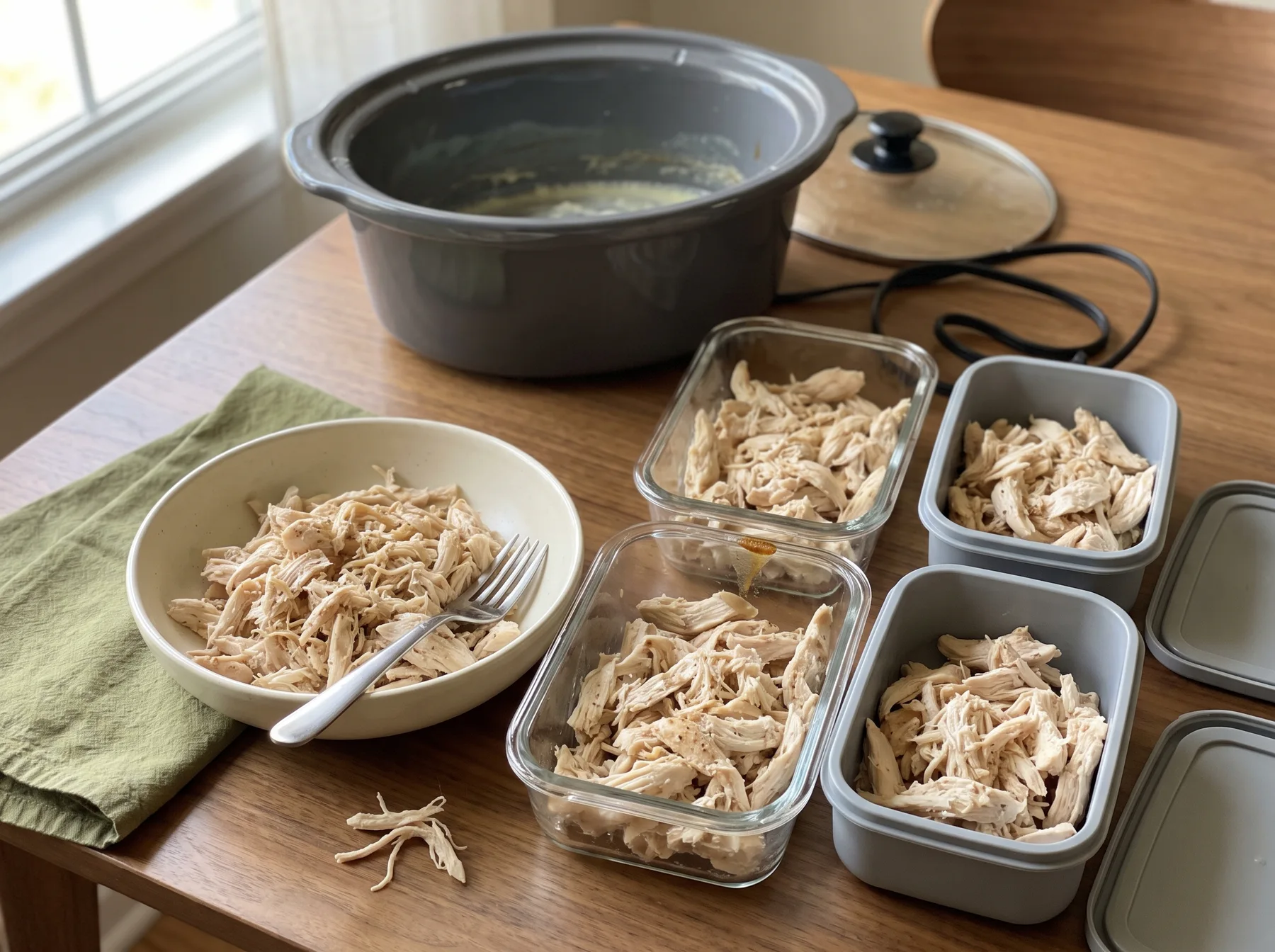
A meal-prep batch is more useful when you know where it is going before you divide it up. Start with your calendar and count the meals for which cooked chicken would genuinely help.
For example, you might reserve a few refrigerator portions for meals early in the week and freeze the remaining portions for a later week. This approach is often more practical than refrigerating every portion at once and feeling pressured to use it all quickly.
Think in terms of complete meals, not just containers of chicken:
- A lunch bowl may need chicken, a cooked grain or starch, vegetables, and a sauce packed separately.
- A wrap or taco meal may need chicken, tortillas, crunchy vegetables, and a sauce or salsa.
- A salad may need chicken stored apart from delicate greens and dressing.
- A soup meal may work best when the chicken is frozen separately and added to a freshly prepared broth or soup base later.
Label freezer portions with the contents and date. If your household uses different portion sizes, label the intended meal or person rather than relying on memory.
Cook the chicken safely and check doneness
Follow the complete recipe's specified LOW or HIGH setting and cooking range. Near the end of the recipe's stated cooking time, check the chicken with a food thermometer. Poultry is safe when it reaches an internal temperature of 165°F.
For whole chicken breasts or thighs, insert the thermometer into the thickest part of the meat without touching bone. For shredded chicken in a sauce or cooking liquid, check several substantial pieces before shredding. If the chicken has not reached 165°F, return the lid and continue cooking, then check again.
Once it is safely cooked, transfer the chicken to a clean bowl or cutting board for shredding, chopping, or slicing. Do not use the same plate or utensils that held the raw chicken unless they have been washed first.
If you are using cooking liquid, treat it as part of the finished food. It should be handled with the chicken, cooled promptly, and stored safely. If the liquid is not needed, discard it according to the recipe directions rather than saving it casually for later.
Shred, portion, and cool chicken promptly
The goal after cooking is to move the chicken out of the large hot slow-cooker insert and into smaller portions that cool efficiently. Large, deep containers hold heat for longer, which makes them less suitable for rapid cooling.
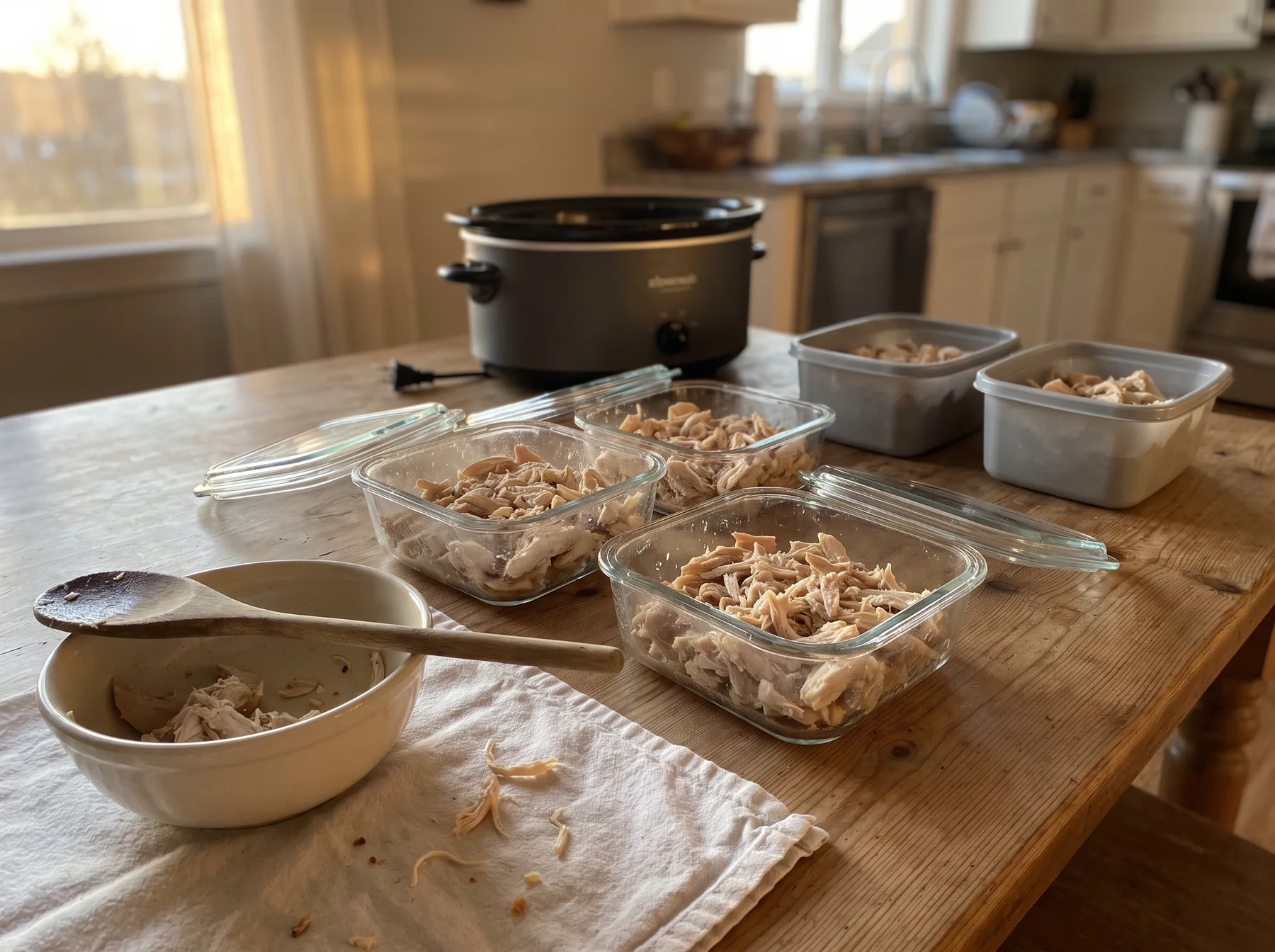
Shred or cut the chicken while it is still easy to handle, then divide it among shallow containers. Spread the chicken in a relatively thin layer rather than packing a large amount into one deep container. If you are including sauce or cooking juices, divide those with the chicken so the portions stay moist and are ready to use.
Refrigerate cooked chicken within two hours of cooking. If the food has been held in temperatures above 90°F, the USDA advises refrigerating it within one hour. Do not leave a slow-cooker insert full of chicken on the counter to cool for an extended period.
The USDA recommends using cooked poultry refrigerated at 40°F or below within three to four days. For longer storage, freeze portions promptly in freezer-safe containers or bags with as much air removed as practical. The USDA FoodKeeper lists cooked poultry at two to six months in the freezer for best quality.
Four ways to use one slow cooker chicken batch
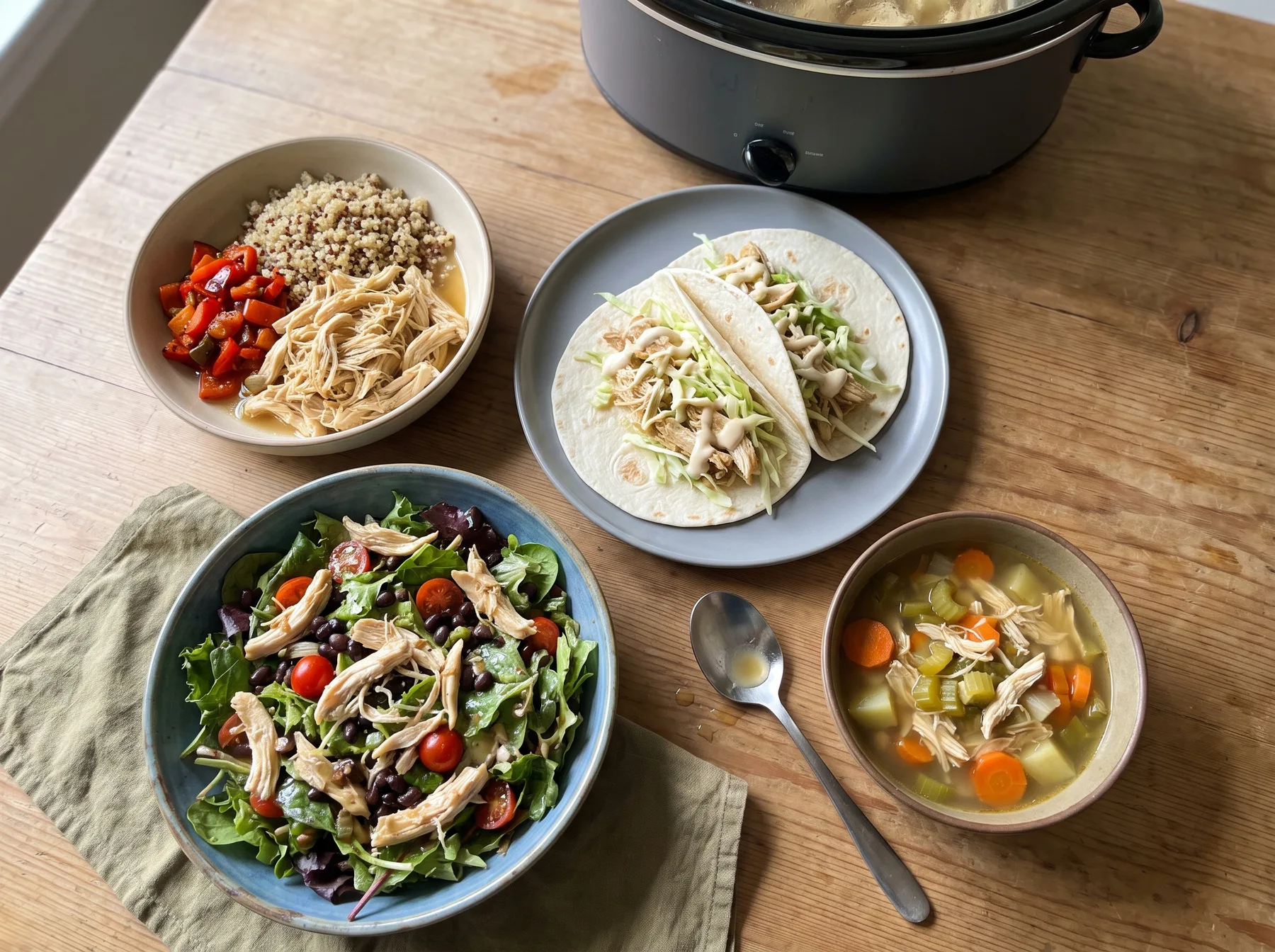
Changing the meal around the chicken is often easier than preparing several completely different proteins. Keep sauces and crisp toppings separate until serving so they retain their texture.
Build warm bowls
Pair chicken with a cooked grain, beans, roasted vegetables, raw vegetables, or a simple sauce. Store components separately if that helps them reheat or stay crisp. A neutral chicken batch can take on different directions here, such as salsa and avocado, a yogurt-based sauce, or a tomato-based topping.
Make wraps or tacos
Warm a portion of chicken and add it to tortillas, wraps, or lettuce cups with shredded cabbage, salsa, or other toppings. Keep tortillas and crunchy ingredients outside the meal-prep container until you are ready to eat.
For a related meal-prep format, see Slow Cooker Turkey Taco Meat for Easy Meal Prep Bowls, Tacos, and Salads when it is available in the Macro Simmer recipe collection.
Add chicken to salads
Cold chicken works well in a lunch salad, but pack it separately from leafy greens if you are preparing ahead. Add dressing immediately before eating. Heartier ingredients such as beans, chopped vegetables, grains, and sturdy greens tend to hold better than delicate dressed greens.
Turn it into a quick soup
A portion of chicken can make a fast dinner when added to a hot soup base with vegetables and beans, pasta, rice, or another prepared ingredient. Reheat the soup thoroughly, and make sure the chicken reaches 165°F before serving.
For another chicken dinner idea, look for Slow Cooker Chicken Parmesan Soup With a Crispy Topping in the Macro Simmer collection.
Refrigerator, freezer, thawing, and reheating guidance
Keep refrigerator portions at 40°F or below and use them within three to four days. If you do not expect to use a portion in that window, freeze it rather than leaving it in the refrigerator.
For frozen portions, thaw chicken safely in the refrigerator. You can also thaw it in cold water or in a microwave when needed, but chicken thawed by either of those methods should be reheated and eaten immediately. Never thaw cooked chicken on the counter.
Reheat leftovers to 165°F. A microwave is convenient for single portions, but pause to stir or rotate the food when possible so it heats more evenly. Covering the food loosely can help retain moisture. Check the temperature in the center of the portion, particularly when reheating a dense container of shredded chicken.
Avoid reheating more chicken than you plan to eat. Repeated cooling and reheating can make food harder to manage safely and can leave the chicken dry.
The USDA's Leftovers and Food Safety guidance is a useful reference for cooling, storage, and reheating.
Common slow cooker chicken meal-prep mistakes and simple fixes
Cooking chicken from frozen
The problem: Frozen chicken in a slow cooker may remain too long at temperatures where bacteria can grow.
The fix: Thaw chicken safely before adding it to the slow cooker. Plan refrigerator thawing ahead when possible.
Treating texture as a safety test
The problem: Chicken may look done before it reaches a safe internal temperature.
The fix: Use a food thermometer and confirm 165°F in the thickest part of the poultry.
Leaving a large batch in the cooker to cool
The problem: A full slow-cooker insert cools slowly.
The fix: Divide the cooked chicken into shallow containers and refrigerate it promptly.
Refrigerating every portion for the entire week
The problem: Some portions may sit longer than the recommended refrigerator storage window.
The fix: Keep only near-term meals refrigerated and freeze portions planned for later.
Packing every meal the same way
The problem: Even convenient food becomes less appealing when every meal has the same flavor and texture.
The fix: Use the chicken as a base, then vary the format, sauce, vegetables, and toppings through the week.
Reheating a large container again and again
The problem: It is harder to heat evenly, and the chicken can dry out.
The fix: Freeze or refrigerate meal-sized portions so you only reheat what you plan to eat.
A simple weekly workflow for slow cooker chicken meal prep
- Choose a complete slow-cooker chicken recipe and check that you have enough containers for refrigerator and freezer portions.
- Thaw chicken safely if needed, prepare the recipe, and cook it according to its stated directions.
- Confirm the chicken reaches 165°F with a food thermometer.
- Shred, slice, or chop the cooked chicken using clean utensils and surfaces.
- Divide it into shallow, meal-ready containers with any intended sauce or cooking juices.
- Refrigerate portions you will use within three to four days. Freeze the rest promptly and label each portion.
- Plan different uses for the chicken so the week includes more than one type of meal.
For a lower-prep cooking approach on another day, explore Dump and Go Slow Cooker Chicken: 7 Prep Rules for Protein-Focused Dinners in the Macro Simmer guides collection.
Keep the batch flexible
Slow cooker chicken meal prep works best when you treat the chicken as a prepared component rather than a week of identical meals. Cook it safely using a complete recipe, portion it promptly, refrigerate what you will use soon, and freeze the rest in amounts that fit your routine. A small amount of planning at that stage makes the chicken easier to use in meals you will actually want to eat.
Join the conversation
0 comments
Leave a comment
Your email address will not be published. Comments are reviewed before appearing.