
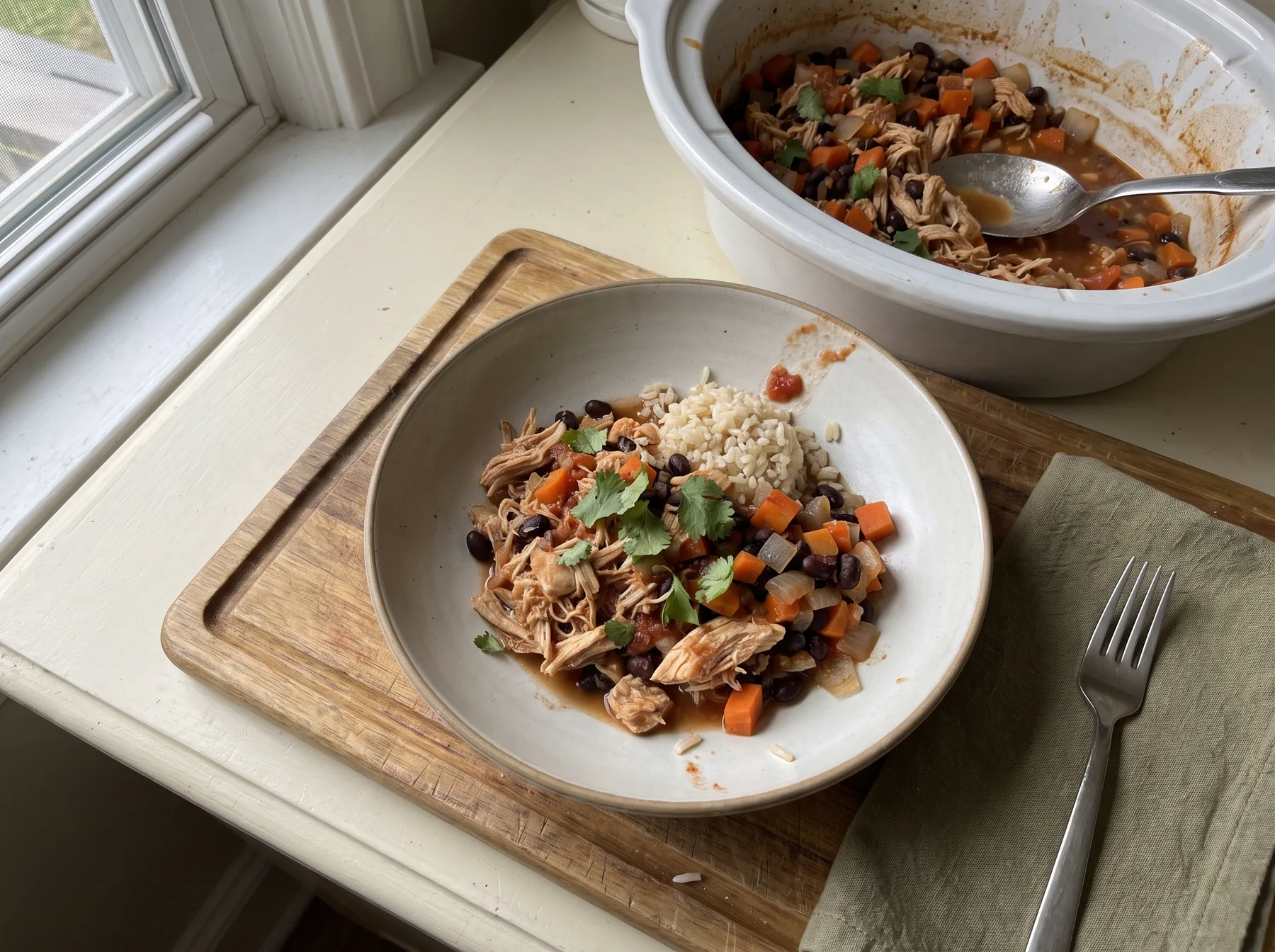
Breadcrumb: Home > Dump & Go > Dump and Go Slow Cooker Chicken
Category: Dump & Go
Dump and go slow cooker chicken should mean a dinner with very little active prep, not a shortcut that skips safe handling or recipe-specific cooking directions. The basic approach is simple: use thawed chicken, add ingredients in a sensible order, let the slow cooker do the work, and confirm the chicken is safely cooked before serving. It is a useful format for low-effort weeknight dinners, planned leftovers, and protein-focused meals built around familiar pantry ingredients.
The name can be misleading. A good dump-and-go meal may still involve opening cans, measuring a sauce, chopping a sturdy vegetable, or washing a cutting board after handling raw chicken. Those small steps help prevent a thin, uneven, or unsafe result.
What dump and go slow cooker chicken means, and what it does not
For chicken dinners, dump and go is a method rather than one fixed recipe. It usually means the ingredients can go into the slow cooker in one short prep session, with no separate stovetop step required. The cooker then handles most of the cooking time.
It does not mean adding frozen chicken, guessing at a cooking time, or filling the cooker with every liquid ingredient in the pantry. It also does not mean that every chicken cut, sauce, or vegetable cooks the same way. A recipe developed for boneless thighs may not give the same result with large bone-in breasts, and a thick tomato sauce behaves differently from broth.
Use a complete recipe for the dish you want to make. These rules help you choose and prepare that recipe with fewer surprises.
Rule 1: Start with thawed chicken, not frozen chicken
Thaw chicken safely in the refrigerator before it goes into the slow cooker. USDA guidance advises against cooking frozen chicken in a slow cooker because the chicken can spend too long at temperatures where bacteria may multiply before it becomes fully hot.
Plan ahead by moving chicken from the freezer to the refrigerator early enough for it to thaw. If you need a faster option, use a safe thawing method described by USDA, then cook it promptly. Do not leave chicken on the counter to thaw.
Starting with thawed chicken also gives a recipe a more reliable chance of reaching the expected texture within its stated cooking range. Frozen pieces can cool the ingredients around them and make timing less predictable.
Rule 2: Build around chicken and a few simple flavor ingredients
A protein-focused slow cooker meal begins with chicken as the central ingredient, then adds ingredients that create a complete, practical dinner. Pantry staples can keep prep short without making the finished dish taste flat.
Depending on the recipe, that may include:
- A flavorful cooking base, such as salsa, crushed tomatoes, marinara, broth, or a prepared simmer sauce.
- Aromatics and seasonings, such as onion, garlic, chili powder, Italian seasoning, cumin, or smoked paprika.
- Filling additions, such as canned beans, lentils that are specified for slow cooking, or sturdy vegetables.
- A finishing ingredient, such as fresh herbs, citrus juice, shredded cheese, or yogurt, when the recipe calls for it.
Keep the ingredient list focused. The advantage of dump-and-go cooking is not adding more ingredients. It is using a small number of ingredients that work together during a long, gentle cook.
For canned beans, use the type and amount specified by the recipe. Draining or rinsing may change the thickness and salt level of the finished sauce, so it should be done only when the recipe directs it.
Rule 3: Put slower-cooking vegetables on the bottom and chicken above them
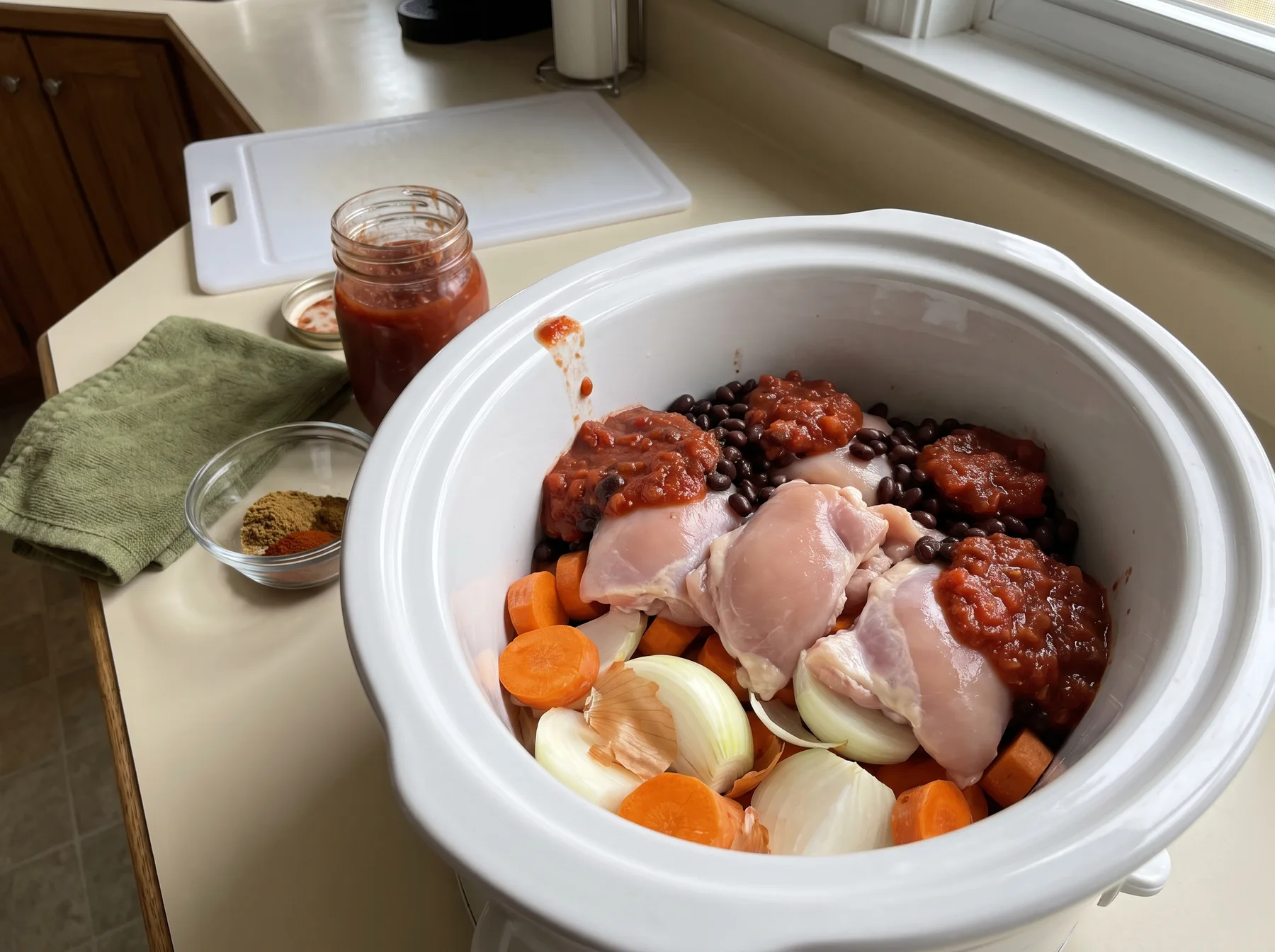
When a recipe includes sturdy vegetables, place them at the bottom of the slow cooker before adding chicken. Pieces of potato, carrot, onion, or similar firm vegetables generally benefit from being closest to the cooker base and surrounded by the cooking liquid or sauce.
Set the chicken over those ingredients, then add the remaining sauce or seasonings as directed. This arrangement helps the vegetables cook in the moist heat while keeping the chicken from being buried under ingredients that may cook more slowly.
The rule is not a reason to improvise a recipe's ingredient order. Some dishes are designed with a different sequence, especially soups, shredded chicken mixtures, or recipes that add delicate vegetables near the end. Follow the stated order when one is provided.
Rule 4: Avoid excess liquid so the chicken is flavorful, not watery
Chicken releases liquid as it cooks. Vegetables, canned tomatoes, salsa, and sauces can release more. That is why a slow cooker chicken recipe often needs less added broth or water than a stovetop recipe.
A common mistake is adding broth simply because the slow cooker looks underfilled. If the recipe calls for a thick sauce, tomato products, or juicy vegetables, extra liquid can dilute the seasoning and leave shredded chicken sitting in a thin sauce.
Use the amount of liquid specified by the recipe. If you are selecting a recipe for a low-prep night, look for one with a clear sauce base rather than a vague instruction to add liquid as needed. Slow cookers do not reduce liquid as quickly as uncovered stovetop cooking.
If a finished dish is thinner than you prefer, use a finishing method that the recipe supports. Shredding chicken into the cooking juices may help it absorb some flavor. A recipe may also call for a thickener or a brief uncovered finish, but do not assume either method works for every dish.
Rule 5: Keep the lid closed and use the stated setting and timing
Choose the LOW or HIGH setting and cooking range specified by the recipe. Slow cookers vary by model, capacity, and heating pattern, so a general timing chart cannot replace directions written for a specific dish.
Keep the lid closed during cooking. Lifting it releases heat and can extend the time needed for the slow cooker to return to temperature. Check only when the recipe instructs you to add an ingredient, stir, or begin checking for doneness.
Avoid overfilling the cooker. Ingredients need room for heat and steam to circulate. The appliance manual for your particular slow cooker is the best source for its capacity guidance, care instructions, and operating limits.
Dump-and-go recipes are especially useful when they state the chicken cut, cooker setting, time range, and finishing step clearly. That information lets you start dinner with confidence instead of trying to judge doneness by appearance alone.
Rule 6: Check chicken with a food thermometer before shredding or serving
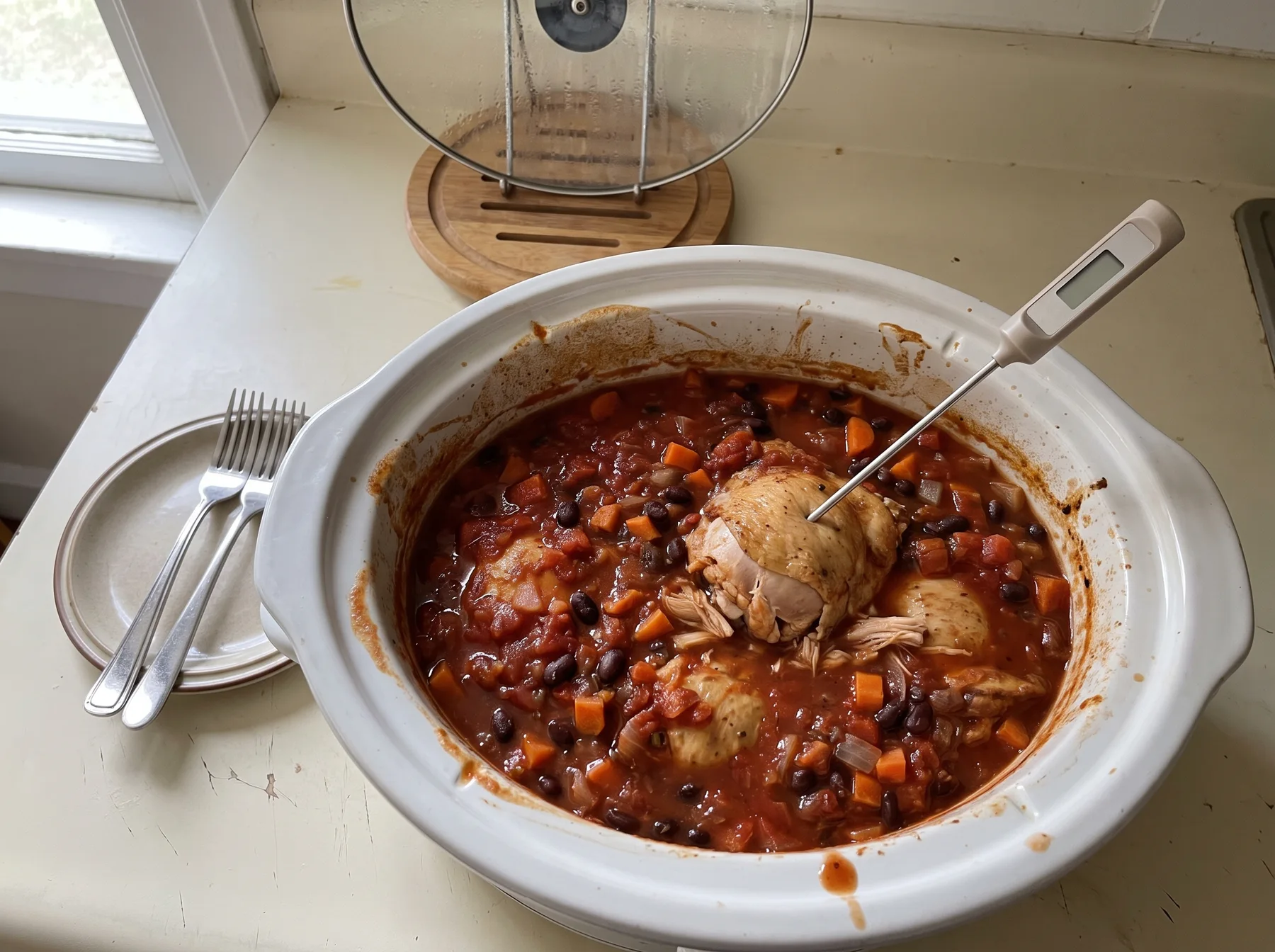
Chicken must reach a safe internal temperature of 165°F. Use a food thermometer in the thickest part of the chicken, avoiding bone when checking bone-in pieces.
Do not rely on color, clear-looking juices, or how easily the chicken pulls apart. Shredded chicken can look done before every piece has reached a safe temperature. For a slow cooker meal with several chicken pieces, check more than one piece when practical, particularly if they differ in size.
Once the chicken reaches 165°F, follow the recipe's finishing directions. Some recipes call for slicing, while others call for shredding and stirring the meat back into the sauce. Shredding into the cooking liquid is often useful for dishes intended for bowls, tacos, sandwiches, or meal-prep containers.
Rule 7: Cool, refrigerate, reheat, and freeze leftovers safely
Slow cooker chicken is convenient for meal prep when leftovers are handled promptly. Transfer food from the cooker into shallow containers so it can cool more quickly, then refrigerate it within two hours of cooking. If the room temperature is above 90°F, refrigerate it within one hour.
USDA guidance recommends using refrigerated cooked chicken within three to four days. Reheat leftovers to 165°F before eating. Reheat only the portion you plan to serve when possible, rather than repeatedly warming and cooling the full batch.
For longer storage, freeze cooled portions in freezer-safe containers or bags. Label them with the dish name and date. Frozen cooked chicken is safe indefinitely when kept continuously frozen, though USDA notes that quality is generally best when it is used within a few months.
For meal prep, portion chicken with the sauce rather than storing dry shredded meat separately, unless the recipe is meant to be served dry. The sauce can help protect the texture during chilling and reheating. Keep toppings that are meant to stay crisp, such as chips, toasted breadcrumbs, or fresh herbs, separate until serving.
A quick dump-and-go chicken checklist
Before turning on the slow cooker, take a moment to confirm the basics:
- The chicken is thawed and has been handled on clean surfaces.
- The recipe identifies the chicken cut, cooker setting, cooking range, and yield.
- Firm vegetables are positioned as directed, often beneath the chicken.
- You have used the stated amount of broth, sauce, or other liquid.
- The lid will stay closed until the recipe's next required step.
- A food thermometer is ready to confirm 165°F.
- Leftovers will be portioned and refrigerated promptly.
These are modest habits, but they make low-prep slow cooker meals more dependable. The goal is not to make cooking careless. It is to move the necessary work to one short, organized prep window.
Related slow cooker dinner ideas
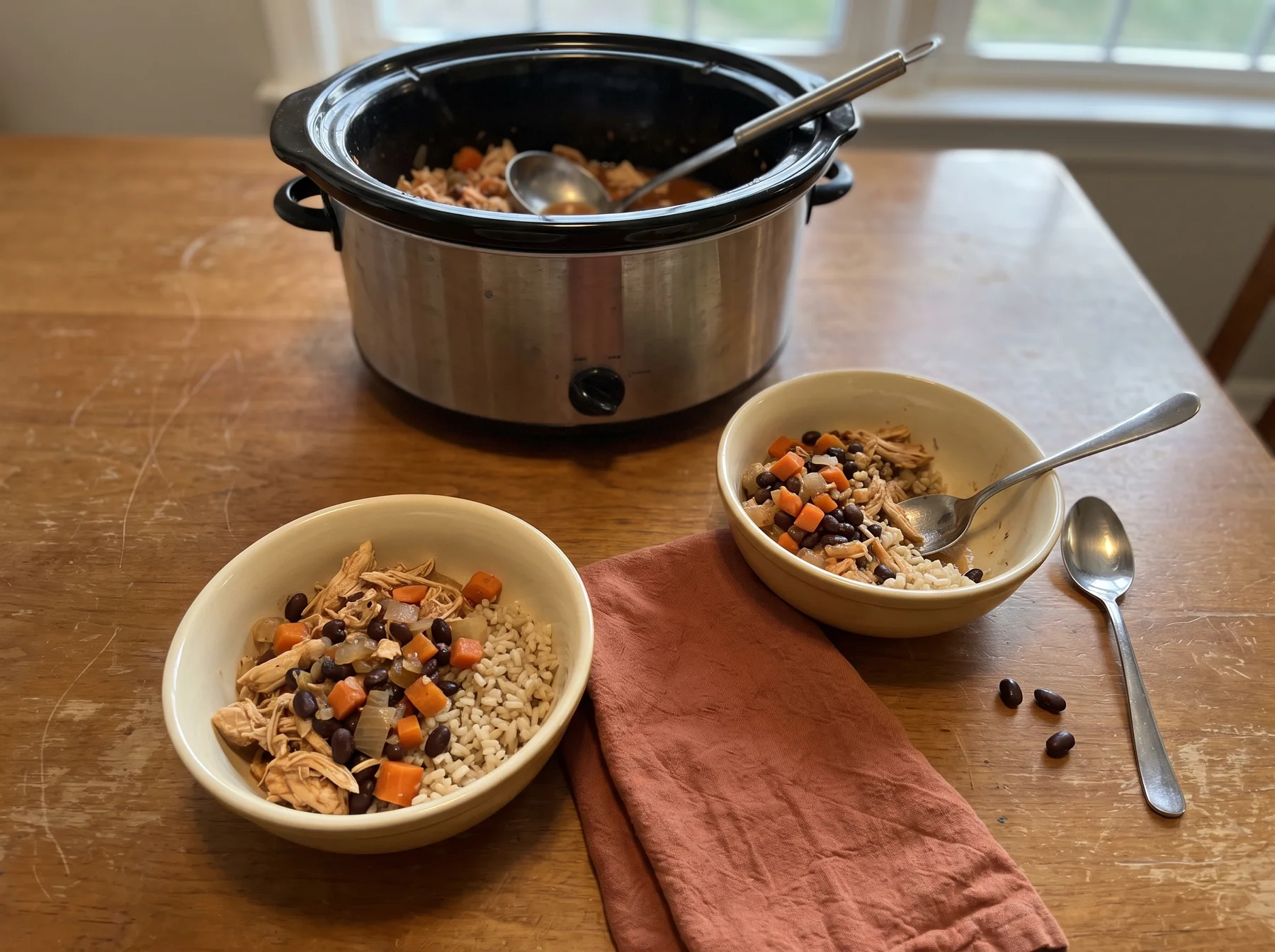
For a soup-style chicken dinner, see Slow Cooker Chicken Parmesan Soup With a Crispy Topping. For a different make-ahead protein option, try Slow Cooker Turkey Taco Meat for Easy Meal Prep Bowls, Tacos, and Salads.
The practical bottom line
Dump and go slow cooker chicken works best when the shortcut is limited to hands-on prep, not food safety or cooking instructions. Start with thawed chicken, use the recipe's liquid and timing, keep the lid closed, and verify 165°F before serving. With those habits in place, the slow cooker can make protein-focused dinners and planned leftovers far easier to manage.
Join the conversation
0 comments
Leave a comment
Your email address will not be published. Comments are reviewed before appearing.